Archive for category: Uncategorized

Verbal Threats Are Still Nursing Home Abuse

When we think of nursing home abuse, we often think of elderly residents being hurt physically when care is lacking in a nursing home facility. Issues that often come to mind are:

  • Bed sores
  • Dehydration or malnutrition
  • Soiled clothes or linens
  • Bruises
  • Untreated infections

These physical forms of abuse can be investigated by the skilled and knowledgeable nursing home attorneys at the Dinizulu Law Group, Ltd. But it’s important to know that verbal and mental abuse is also common in nursing home facilities. In such cases, the law still guarantees you or your loved one protections. Verbal or mental abuses include threatening a resident by:

  • Yelling
  • Intimidation
  • Humiliation
  • Blame

Such examples include threatening to withhold food, intimidating the elder from socializing with visiting family members, or demeaning the elderly person for certain behavior. This type of emotional abuse can be silent as well, and this usually happens when a caregiver ignores the elder’s requests and needs.

While the physical signs of such abuse may not be immediately visible, the emotional and psychological impact of this abuse is damaging, and does ultimately have physical effects. Therefore, it is important to get help right away for your loved one. Know that Illinois law entitles you or your loved one to full and fair compensation if you or your family member has been affected by verbal or mental abuse.

At the Dinizulu Law Group, Ltd. our nursing home abuse attorneys in Chicago are dedicated, knowledgeable, and have over 50 years of combined experience. We hold those liable who have brought harm to you or your loved ones. Our verdicts & settlements have helped many families get answers and arrive at a place of security. Call our Chicago nursing home abuse lawyers at 1 (312) 384-1920 or 1 (800) 693-1LAW or reach us by email to get more info.

Caregivers in Illinois Nursing Home Harass Resident on Facebook Live Asking Him to Remove His Pants

Social media has definitely opened up many opportunities for people all across the world. It has also helped many families identify when their loved one was being mistreated while under the care of nursing home staff. Back on July, 11 Alive reported that three nursing home caregivers were arrested and criminally charged in GA after it was discovered that they had recorded a video of them “cussing” and “joking” about a patient who was about to die and shared it on Snapchat. And just recently, the Miami Herald reported that six caregivers working at an Illinois nursing home were videotaped engaging in inappropriate behavior themselves. Read more

Are Drowsy Driving Crashes Underreported?

While we are all aware of how dangerous drowsy driving is, it seems as though “official statistics from the U.S. government indicate that only approximately 1%-2% of all motor vehicle crashes involve drowsy driving,” which might not be a true reflection of how serious the problem actually is [Source: AAA Foundation for Traffic Safety]. The fact is, it isn’t always obvious when a crash occurs as a result of drowsy driving as there isn’t a way to detect it like there is with drunk driving which may be why statistics are being underreported. However, after research was carried out by the AAA, it was determined that drowsy driving may actually be a factor in almost 10% of crashes. Read more

Nursing Home Resident Badly Beaten by New Roommate Just One Day Before His Birthday

When a resident is placed to live in a nursing home that is Medicare and/or Medicaid-certified, they are guaranteed certain rights and protections. Some of these rights include the right to:

  1. Be free from discrimination.
  2. Be free from abuse and neglect.
  3. Be treated with respect.
  4. Get proper medical care.
  5. Be free from restraints.

[Source: Medicare.gov]. Read more

Illinois Mother Feels No Justice Was Served for the Death of Her Teen Son Who Was Struck by a Truck

On October 15, 2017, Bobby Figinsky, 13, and his friend Macayla Wilson, 13, were walking along a roadway in Roscoe, which is about 80 miles from Chicago around 7:00 p.m. when a Dodge Dakota pickup truck came up from behind and struck the two teens. When 911 was called and police and medics arrived at the scene, both teens were transported to Mercyhealth Hospital in Rockford and that is where Figinsky was pronounced dead at 7:16 p.m. Wilson, however, managed to survive although she had sustained injuries. Read more

Driver of Tractor Trailer Rear-Ends Van on I-57 in IL Resulting in One Woman’s Death

A rear-end accident claimed the life a 74-year-old woman from Calumet City and left several others who had been traveling inside the vehicle with her injured. The Belleville News-Democrat shared some of the details pertaining to the horrific incident that occurred on Saturday, September 5th, explaining what led up to the incident. Read more

How Can “Black Boxes” Help in Your Truck Accident Case?

When you think of black boxes, you may typically think of them as being linked to an airplane crash. Anytime a plane crashes, the plane’s black box can be used  to investigate the cause of a crash and prevent the same from happening again.

A similar investigation can also be carried out using a commercial truck’s black box in the case of a truck accident. Referred to as ELDs (electronic logging devices), these black boxes capture significant information that help explain the cause of a truck crash. This includes:

  • Driver speed (including average speed)
  • GPS coordinates
  • Steering position
  • Braking activity, including whether the brakes were applied
  • Whether seatbelts were in use
  • Whether the driver slammed on his or her brakes

truck crash injury law

Since Dec 2017, most trucking companies are required to have an ELD installed in their commercial vehicles that has been registered with the FMCSA (Federal Motor Carrier Safety Administration).

While this black box is available in a majority of trucks, in the case of your truck accident the truck’s insurance company will oftentimes never volunteer this data to you. It takes a personal injury law firm with skilled and knowledgeable truck accident attorneys to gather this information for you.

When hiring a truck accident attorney in Chicago or elsewhere, it’s important to ask the personal injury firm in Chicago or elsewhere what type of resources they have available and what kind of experts they work with?  At the Dinizulu Law Group, Ltd. we work with well-qualified truck experts who can perform the necessary black box downloads and then interpret this data in a meaningful way.

These findings become critical in truck accidents involving disputed liability. When the truck company disputes fault and refuses to accept responsibility, as they often do, our experts’ findings have helped many recover fair compensation for their injuries. Check out our verdicts and settlements page to see these results. For a free, initial consultation with one of our Chicago truck accident lawyers, contact us at 1-312-384-1920 or 1-800-693-1LAW or by email.


Click here to read more articles

When Forced Feeding is Nursing Home Abuse


As our loved ones age, their appetites may diminish or they may have health conditions that cause difficulty in eating and swallowing food. When this happens it’s important that our loved ones are not malnourished or dehydrated due to a reduced nutrient intake.

Long-term residential facilities like nursing homes are required to provide around-the-clock care for their residents. This includes not just feeding residents, but also monitoring their daily calorie and nutrient intake.

Residents with health conditions like dysphagia have trouble swallowing food and are more likely to aspirate, meaning getting food or liquid breathed into the airway, which may lead to pneumonia. But even in these instances, a feeding tube should only be used as a last resort to prevent malnutrition or dehydration. Initial steps can be taken to help a resident get adequate nutrition. Such steps include:

  1. Providing a resident with physical therapy to help with swallowing or using utensils
  2. Providing utensils that are easier to hold and use
  3. Sitting with the resident and manually feeding the resident

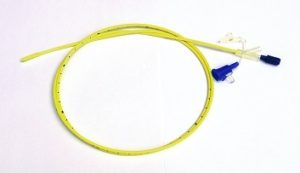
feeding tube nursing home neglect

If any of the preliminary steps work and help a resident get the daily calorie intake they need, there is no reason to put a resident on a feeding tube. But many nursing homes, for their own convenience and in order to save on staff expenses, will put residents on feeding tubes even when it’s not absolutely necessary. Remember, a nursing home cannot order the use of a feeding tube without the consent of the resident or the resident’s authorized representative unless other options have been exhausted.

Feeding tubes can be live savers, but they can cause complications which are easily avoidable for residents who can eat well through other means. If your loved one is put on a feeding tube you believe is unnecessary, this may be a form of nursing home abuse. Our Chicago nursing home abuse attorneys are here to help if you or your loved one is in harm’s way. Contact the Dinizulu Law Group, Ltd. at 1 (312) 384-1920 or 1 (800) 693-1LAW or by email.

Quality Care Harder to Find for Residents with Mental Health Issues


Our elderly loved ones often need care in a nursing home if they face a mental condition like Alzheimer’s disease or other forms of dementia. This study performed by the University of Rochester School of Medicine and Dentistry in New York found that nursing homes with the highest Medicare rating are the ones least likely to admit patients with mental health conditions.

Even manageable conditions like depression and anxiety lower a resident’s chance of acceptance in the best facilities by 8%. With bipolar disorder, patients were 11% less likely to go to a five-star facility; the odds were 28% lower with schizophrenia, 27% lower with a substance abuse problem, and 32% lower with personality disorders.

Even after excluding dementia and Alzheimer’s disease, which are among the most common causes of nursing home admissions, people with other mental health conditions account for about 50% of all nursing home residents. Knowing these figures, we can only conclude that most five-star facilities are not accessible to the patients most in need.

As a result, what happens is patients with the most needs, such as those who need help with basic daily activities, such as bathing, dressing, and eating, end up in one-star facilities. These facilities receive low ratings due to violations in the quality of care. Meaning, these facilities are already not meeting their existing obligations to all their residents. Add a resident with many physical or mental needs to such a facility and the problem becomes worse.

When a resident with Alzheimer’s or another mental health condition has limited residency options and ends up in a one-star facility, that resident becomes more prone to nursing home neglect. One-star facilities have low ratings because they do not hire adequate staff, have poor training protocols, and may not even be well-versed in dealing with residents with mental health needs, even though many such residents are ending up in these facilities.

At the same time, we should all know that nursing home neglect can happen in any facility. The rate of nursing home neglect has been rising in Chicago and nationwide. Our Chicago nursing home neglect attorneys are here to help if you or your loved one has been harmed in a nursing home. With over 50 years of combined experience, we have recovered millions in verdicts and settlements. Our nursing home neglect lawyers are here for you. Call us at 1 (312) 384-1920 or 1(800) 693-1LAW, or reach us by email.

What Measures Should Nursing Homes Take to Prevent Infections?


Because of the number of patients they house, large residential facilities such as nursing homes are more prone to infections and contagious diseases. But there are precautions and safety measures nursing homes are expected to know and follow that prevent the spread of disease, and can prevent an individual resident’s condition from turning into a large-scale outbreak.

Only four pathogens—influenza virus, norovirus, salmonella and S pyogenes—make up more than 50% of all infectious agents involved. These common viruses and bacteria are easy to tackle if a nursing home has a proper system of infection control and prevention. While many of us have caught and easily recovered from these illnesses, for the elderly they can cause serious health complications, and may even lead to death.

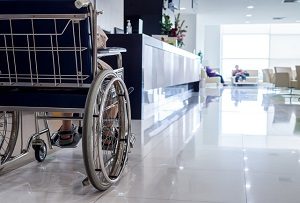
elderly man on wheelchair in nursing home

Influenza Virus
All seniors over 65 are recommended by the CDC to take a flu shot every year around fall. In a nursing home especially, the doctors, nurses, and staff must remain aware of this recommendation and communicate it on patient charts and medical records. Furthermore, all nursing home staff members need to understand the protocols of disease prevention and control. Basics such as changing gloves and washing hands, need to be known and fully followed by staff. Unfortunately, these factors get overlooked in understaffed nursing homes. Employees get overwhelmed by the number of residents they must care for, and they start bypassing even the most basics steps in infection control.

Norovirus
Caregivers, if infected, can easily spread norovirus to residents by having close contact, such as by caring for, or preparing food for them. These are the main duties of caregivers at a nursing home. The dietary department is responsible for preparing residents’ meals, and nurses and other caregivers interact with residents daily. Imagine how many residents could get sick from a sick staffer who prepares their food. Nursing homes should not only have policies that encourage their staff to stay home when they are sick, but also invest in educating all staffers regarding how they can prevent the spread of disease.

Salmonella
Knowledge of food preparation and safety must be known to nursing home staffers, especially those responsible for handling food. Uncooked or undercooked food are usually the cause of salmonella. Many other food-borne illnesses are also easily preventable when a nursing home properly implements food safety guidelines.

Streptococcus
Streptococcus, the bacteria that causes strep throat, can result in more serious conditions such as rheumatic fever, streptococcal toxic shock syndrome, and pneumonia. Streptococcus can spread through airborne droplets when someone with the infection coughs or sneezes. You can also pick up the bacteria from a doorknob or other surfaces and transfer them to your nose, mouth, or eyes. Therefore, because streptococcus is so contagious, it is important for nursing homes to have proper measures in place that can prevent an individual’s sickness from turning into an outbreak.

What You Can Do?
Know that there are options for you if you or your loved one has suffered injury at a nursing home due to an untreated bacterial/viral infection. Our Chicago nursing home neglect attorneys fight for you and hold these care facilities accountable for their wrongdoings. The Dinizulu Law Group, Ltd. has over 50 years of combined experience that we put to the test everyday fighting for you. Contact us for your free, initial consultation. We can be reached at 1 (312) 384-1920, 1 (800) 693-1LAW, or by email.

Translate »