Tag Archive for: nursing home neglect attorney Chicago IL

Posts

Are Unsanitary Living Conditions and Lack of Hygiene a Form of Nursing Home Neglect?

CHICAGO, IL – Many nursing home residents rely on staff members to help them with the consistent care they need. Nursing home staff members help residents bathe, feed them, help with administering medication, treat injuries, and transfer residents from their wheelchair to bed. Another key responsibility of nursing home staff includes to maintain a clean, sanitary environment for residents to live in. When staff members fail to maintain a clean facility, sanitize equipment, and help residents with hygiene-related needs, these may be signs of nursing home neglect.

Unsanitary Equipment in Nursing Homes Can Lead to Infection and Illness

With COVID surging nursing home facilities, staff members must be precautious to prevent infection outbreaks to keep residents safe. Since many nursing home residents’ bodies are weakened by age and/or disability, exposure to any virus, fungi, bacteria, or other pathogens can be deadly. Nursing homes should be regularly cleaned and sanitized to avoid these types of outbreaks in facilities, including cleaning wheelchairs, shared equipment, and other common places.

According to the Illinois Department of Public Health (IDPH), kitchens must be properly cleaned and sanitized, and all kitchen staff must be trained and certified in safe food handling to prevent the spread of illnesses. For example, if bathroom showers, toilets, or sinks are not regularly cleaned, it can become a haven for bacteria and germs to grow that can cause residents to become ill.

  • Colds
  • Bed sores
  • Flu
  • Bed bugs
  • Infections, such as bacterial pneumonia, urinary tract infections, and influenza
  • Diarrhea, which can sometimes develop into a chronic problem
  • Athletes foot
  • Scabies
  • Ringworm
  • Lice
  • Psychological damage, such as depression and reduced quality of life

Proper Resident Hygiene is Essential for Physical and Mental Health

Nursing home staff has the responsibility to keep residents clean and hygienic, as many residents are unable to use the restroom, bathe, or dress without the assistance of staff. Some residents may rely on adult diapers. If staff members fail to regularly change residents’ soiled diapers, clothing, or bed sheets, infections and medical complications can occur.

Bed sores are another common and major concern in nursing home facilities. If a resident develops a bed sore and it is not cleaned and regularly maintained, the wound may become more infected and even develop into a deadly condition called sepsis. The Mayo Clinic suggests to regularly clean and dress bed sores to prevent further infection.

Contact a Nursing Home Negligence Attorney in Cook County, Illinois

Nursing home residents are often unable to stand up for themselves when forced to live in unsanitary living conditions, or suffer from other forms of nursing home abuse. Many residents rely on family members to watch for signs of poor hygiene or advocate for them when they see they are not receiving the care they rightfully deserve. If you believe your loved one is a victim of nursing home abuse or neglect, call us today at (312) 384-1920 to schedule a free consultation with one of our skilled nursing home abuse attorneys. We know when our clients are being mistreated and living in unsanitary living conditions and are committed to bringing your loved one the justice they deserve. Please visit our website for more information.

What if My Nursing Home Was Found Noncompliant with Federal Regulations?

CHICAGO, IL – If a nursing home is found noncompliant with federal requirements, the infraction depends on the nursing home’s general history and the infraction itself. Every nursing home that accepts Medicare and Medicaid payments are subject to federal regulations under the Nursing Home Reform Act of 1987. The reform law was adopted to ensure each resident receives quality care free of all neglect, abuse, and mistreatment.

The law requires federal oversight of nursing homes and for states to also inspect nursing homes regularly for violations. The state uses specific criteria when inspecting facilities that includes whether a deficiency is an isolated incident or whether the deficiency causes immediate harm to a resident.

Understanding Federal Nursing Home Regulations

According to federal nursing home regulations, nursing homes must:

  • Conduct comprehensive, accurate assessments of each individual’s functional capacity
  • Provide necessary assistance needed for a resident to carry out regular daily activities, such as good hygiene, grooming, and healthy nutrition
  • Prevent a resident’s ability to bathe, groom, dress, move around, use the bathroom, eat, and communicate from deteriorating
  • Ensure residents receive proper treatment and supportive devices to maintain their vision and hearing
  • Work to prevent residents from developing bed sores and pressure sores by prevention infection and encouraging mobility
  • Have an adequate amount of trained nursing staff
  • Develop a comprehensive care plan for each resident, which must involve the resident
  • Ensure residents receive adequate supervision to prevent slips and falls in nursing homes
  • Help residents avoid dehydration and malnutrition
  • Ensure that residents receive adequate medical attention and medication, limiting medical mistakes

Nursing homes are required to treat each resident with respect, dignity, and courtesy to keep records about their progress and any regressions.

Factors That Determine the Severity of a Deficiency

There are four factors that determine the severity of a deficiency:

  • Level 1 – No actual harm with potential for minimal harm: A deficiency that has the potential for causing no more than a minor negative impact on the residents or employees;
  • Level 2 – No actual harm with a potential for more than minimal harm that is not immediate jeopardy: Noncompliance with the requirements that results in the potential for no more than minimal physical, mental, and/or psychosocial harm to the residents or employees and/or that result in minimal discomfort to the residents or employees of the facility, but has the potential to result in more than minimal harm that is not immediate jeopardy;
  • Level 3 – Actual harm that is not immediate jeopardy: Noncompliance with the requirements that results in actual harm to residents or employees that is not immediate jeopardy;
  • Level 4 – Immediate jeopardy to resident health or safety: Noncompliance with the requirements that results in immediate jeopardy to resident or employee health or safety in which immediate corrective action is necessary because the provider’s noncompliance with one or more of those requirements has caused, or is likely to cause, serious injury, harm, impairment or death to a resident receiving care in a facility or an employee of the facility.

Factors that Determine the Scope of a Deficiency

There are three levels that are used to determine the scope of a deficiency: isolated, pattern, or widespread. The scope levels reflect how residents were affected by the deficiencies cited:

  • Isolated: When one or a very limited number of residents or employees is/are affected and/or a very limited area or number of locations within the facility are affected;
  • Pattern: When more than a very limited number of residents or employees are affected, and/or the situation has occurred in more than a limited number of locations by the locations are not dispersed throughout the facility;
  • Widespread: When the problems causing the deficiency are pervasive (affect many locations) throughout the facility and/or represent a systemic failure that affected, or has the potential to affect, a large portion or all of the residents or employees.

Punishment for Noncompliance

Any nursing home who fails to comply with federal regulations set forth by the Centers for Medicare and Medicaid (CMS) are subject to sanctions.

CMS and state agencies can punish nursing homes that fail to meet compliance, as well as those that regularly perform poor during inspections. Sanctions are based on the seriousness of offenses and may include:

  • Appointing temporary managers for facilities
  • Hosting training and other workshops for staff members
  • Creating directed plans of correction
  • Imposing a sliding scale of fines
  • Removing homes from Medicare and Medicaid

Under federal guidelines, nursing facilities in violation can be terminated from Medicare and Medicaid if they fail to remedy issues within six months. Being removed from the program means the nursing home can no longer accept patients who pay with Medicare and Medicaid.

Notifications Nursing Homes Receive When They Are Noncompliant

When nursing homes are not in compliance with federal regulations, CMS or the state must give the facility notice of the remedy, including:

  • The type of remedy being imposed
  • The nature of the noncompliance
  • The effective date of the remedy
  • The home’s right to appeal the determination that led to the remedy

How to Find Information about Specific Nursing Homes

The Nursing Home Compare tool contains information on every Medicare and Medicaid certified nursing home in the country. For nursing homes not certified under Medicare or Medicaid, check specific State website if available.

Contact a Nursing Home Abuse Attorney in Chicago, Illinois

If you suspect your loved one is being abused or neglected by their nursing home facility that is noncompliant with federal regulations, please contact one of our experienced nursing home abuse attorneys today. Our attorneys are well-seasoned and know when our clients are being mistreated. Contact the Dinizulu Law Group located in Chicago, Illinois today at (312) 384-1920 for a free consultation or visit our website for more information.

COVID-19 New York Death Toll Miscounted by “As Much As 50%”

CHICAGO, IL – New York Attorney General Letitia James (D) released a 76-page report on Thursday alleging the New York State Department of Health may have undercounted nursing home deaths by “as much as 50%.”

According to CBS News, the discrepancy is primarily due to the Health Department’s nursing home death data not accounting for nursing home residents who died of COVID-19 after being transferred to a hospital from their nursing home. The report is based on preliminary findings from an investigation that began in March into nursing homes policies that caused residents to be abused and neglected.

Governor Andrew Cuomo (D) is under scrutiny of obscuring the true death toll in long-term care facilities since the pandemic began in early-March.

According to the preliminary data analysis from the Office of the Attorney General, “a portion of nursing homes during the pandemic suggests that many residents died from COVID-19 in hospitals after being transferred from their nursing home,” (The Hill).

In one example, a facility that reported five confirmed and six presumed COVID-19 deaths to the Department of Health as of August 3. However, the facility reported to the attorney’s general office 27 COVID-19 deaths at their facility and 13 hospital deaths – a staggering discrepancy of 29 deaths.

In another instance, a facility reported one confirmed and six presumed COVID-19 deaths as of Aug. 3 but reported to the attorney general’s office 31 deaths – a discrepancy of 25 deaths.

More than 20 nursing homes are under investigation.

The Kaiser Family Foundation mentions only 6% of coronavirus cases have been associated with long-term care facilities; however, these cases make up nearly 39% of all COVID-19 deaths in the United States.

James said aside from miscounting the death toll, the investigation also revealed the lack of compliance with infection control protocols. This includes not isolating residents who had tested positive for coronavirus or even doing a basic employee screening of the virus, putting staff members and residents at an even higher risk.

The report also found fault with an order Gov. Cuomo issued at the start of the pandemic that stated nursing homes could not turn away patients who tested positive for COVID-19, as long as they were medically stable. The move was intended to help relieve overburdened hospitals that were sending patients elsewhere to free up capacity.

Although the state-commissioned report that was released in July didn’t find fault with the policy, James’s report said that it certainly may have increased the risk of the virus and spreading it to others at the facility.

Virginia woman speaks out against abuse at local nursing home

CHICAGO, IL – Helen Norfleet was 96 years old when she passed away after living at nursing home facility in Salem, Oregon. According to her death certificate, she died from pleural effusion, renal failure, pneumonia, failure to thrive, dementia, osteomyelitis on the left foot, among several other factors.

“My nanny was everything,” granddaughter Julie Parsons said.

The months before Norfleet passed away stands out the most to her granddaughter. Parsons visited her grandmother every day at Raleigh Court Health and Rehabilitation Center.

Parsons mentioned Raleigh Court actually worked well for her family until March 2020. “March 13 [to be exact], that was the last time I was allowed in that facility to see my grandmother,” said Parsons.

Parsons visits began happening through a window or computer screen. That’s when she slowly began to watch her grandmother’s hygiene decline.

“Her hair would be so greasy it looked wet,” Parsons described.

Parsons grandmother tested positive for COVID-19 at the beginning of September. According to her caregivers, she was asymptomatic and was doing well. One day later, Parsons called the facility to check on her grandmother when she was told Norfleet had fallen out of her bed, resulting in severe bruising on her face.

On October 4, Parsons got a call that her grandmother had a wound on two of her toes.

Three weeks later on October 21, Parsons was told the wound had worsened to the point that amputation was necessary. That night, Norfleet was taken to Lewis Gale and Parsons was able to see her grandmother for the first time since March.

Parsons recalled when the doctor came in and removed the bandage from Norfleet’s foot, she collapsed. “It was the most horrible, disgusting thing I had ever seen in my life. My grandmother’s toes had gotten so bad, and so infected that the bone was exposed,” Parsons said.

After Norfleet had her amputation, she stayed in the hospital a little over a week. During this time, Parsons recognized bruising all over her grandmother’s arms and chest.

On October 30, Parsons filed a police report which resulted in an affidavit that’s for a search warrant for Norfleet’s medical records at Raleigh Court Health and Rehab.

Three days later, Norfleet was discharged and taken to a different facility. Only three days later, Parsons got a call that her grandmother was not doing well.

“She was not herself. She told me that night she was dying,” Parsons recalls. “[She] fell asleep on November 20th, she went to heaven.”

Parsons told WDBJ7 the only peace she has is knowing that her grandmother is no longer suffering. Parsons promised her grandmother that she would get justice for her and the other victims of abuse and neglect.

Parsons is currently waiting to see if the commonwealth’s attorney for Roanoke City, VA will pursue criminal charges against Raleigh Court Health and Rehab.

What is considered medical malpractice and when can medical providers be held liable in Illinois?

CHICAGO, IL – If a patient is harmed as a result of negligent medical treatment in Illinois, the doctor, hospital or other medical providers may be held liable for medical malpractice. Physician’s in Illinois are expected to provide care according to a certain care, also known as the standard of care. When they stray away from that standard and cause injury to a patient, further illness, or death, it is considered medical malpractice.

What Constitutes Medical Malpractice in Illinois?

Medical malpractice involves any deviation in the standard of care that medical providers owe to their patient. The most common types of medical malpractice claims include:

  • Diagnostic Errors
  • Medication Errors
  • Surgical Errors
  • Anesthesia Errors
  • Hospital Malpractice
  • Emergency Room Malpractice
  • Birth Injuries or Obstetrical Negligence
  • Unauthorized Treatment
  • Breach of Doctor-Patient Confidentiality
  • Unnecessary medical treatment or procedures

Illinois Statute of Limitations for Medical Malpractice Lawsuits

A “statute of limitations” refers to the law that sets a time limit on the right to file a lawsuit. Statute of limitations vary, meaning there are different deadlines for different types of cases.

In Illinois, the statute of limitations to file a medical malpractice lawsuit in Illinois is generally two years from the date the claimant knew or reasonably should have known of the injury. If a patient is under the age of 18 when the alleged medical malpractice occurred, the statute of limitations extends to eight years from the alleged act or omission; however, an act cannot be filed after the minor claimant’s 22nd birthday. If the claimant is mentally incompetent, the statute does not begin to run until the disability is removed.

If medical malpractice results in death, the wrongful death two-year statute of limitations period begins to run on the date of the decedent’s death.

Damages for Medical Malpractice Claims in Illinois

The plaintiff must prove the defendant is liable for medical malpractice for it to be ruled in their favor. In this case, he or she may be able to collect money damages for: medical expenses, pain and suffering, lost wages, household services, and permanent disability and disfigurement.

Some states place damage caps on noneconomic damages (such as pain and suffering), but Illinois does not have any damage caps on medical malpractice damage awards.

Liability Issues Involved in Illinois Medical Malpractice Claims

Illinois follows a form of modified comparative negligence, where a medical malpractice action is barred only if the claimant’s contributory fault is more than 50% of the proximate cause of the injury or damage for which recovery is sought. If the claimant is less than 50% at fault for the injuries, he or she may still pursue a medical malpractice claim, but the financial recovery is reduced in proportion to the claimant’s percentage of fault.

Defendants in an Illinois medical malpractice lawsuit are jointly and severally liable for all damages. In other words, if there is more than one negligent party (such as a doctor and hospital), the plaintiff may file a malpractice claim seeking full recovery from any defendant.

There are legal issues involved with Illinois malpractice claims which makes them complex and involves a comprehensive factual investigation. It’s important to consult with a skilled Illinois medical malpractice attorney as soon as possible to review your case. If you or someone you loved has been injured due to a medical providers negligence, please contact the experienced medical malpractice attorney’s at Dinizulu Law Group, Ltd. We understand the process can be difficult and stressful which is why we offer medical malpractice consultations for free. Please visit our website for more information.

Who Owns A Nursing Home Can be the Difference Between Life and Death

CHICAGO, IL – During the COVID-19 pandemic, nursing homes have been hit hard with the most vulnerable population and has resulted in death rates spiking. Mathematica Policy Research researched COVID-19 cases and deaths concentrated in certain long-term care facilities including nursing homes and assisted living communities. Findings proved for-profit nursing homes had more than 60 percent more cases and deaths than nonprofit nursing homes.

In Illinois counties that have been hit hardest by the virus, for-profit nursing homes have nearly double the deaths per bed compared to nonprofit facilities.

Last January, Elizabeth Stout was trying to find a place for her brother, John Krok.

Krok, 62, had been struggling with a brain tumor for nearly two years after suffering from a seizure at Jewel supermarket where he worked as a cashier. Krok has undergone numerous medical procedures, hospital trips, and rehab-center stays but ultimately ended up back in the hospital.

Stout recalled only having a few days to get her brother out of the hospital and into a nursing home.

She printed out federal ratings of nursing homes near her brother’s house on Chicago’s Northwest Side. She saw two facilities with high ratings for a sufficient amount of staff to care for residents – both of which were owned by nonprofit organizations. After touring the facilities, she tried to get her brother admitted.

He was rejected from both because Krok was reliant on Medicaid, a government funding program that pays for long-term care for those who cannot afford it.

Stout looked at Fairmont Care, a facility with lower staffing ratings but welcomed Medicaid recipients.

Stout had no knowledge and no way of knowing that Fairmont’s main proprietor was among the state’s least effective nursing home owners at protecting residents from COVID-19.

Krok was transferred from a hospital to Fairmont Care on January 27. He was placed with a roommate who had a hacking cough that later tested positive for COVID-19.

Soon after, Krok developed pneumonia in both lungs. Fairmont sent him to the hospital where he tested positive for the virus.

When Krok caught COVID-19, the virus had just begun to take hold of the Chicago area and other parts of Illinois spreading rapidly in nursing homes. Nearly a year later, and the virus is continuing to spread at high speeds. Nursing home residents now account for 8,297 deaths in Illinois.

The coronavirus spread through long-term care facilities in Illinois has not been even: nursing homes that operate for profit have had more infections and deaths per bed than nonprofit facilities. For profit nursing homes have had nearly double the death rates as nonprofit facilities.

Advocates for nursing home residents and staff members say Illinois should focus more on holding owners accountable for packing elderly and frail people into poorly staffed facilities where the virus can quickly spread.

Staff Shortage and Overworked

Fairmont Care, the facility that took in John Krok, has some of the worst COVID-19 numbers among nursing homes in Illinois. In January 2020, it average 152 occupied beds. By November, state public-health regulators had recorded 155 infections and 32 deaths tied to the facility. Fairmont had more COVID-19 deaths per occupied bed than 95 percent of the state’s 758 long-term care facilities.

Elizabeth Stout, Krok’s sister, was not concerned about the care her brother was received at Fairmont. She praised a social worker, physical therapist, and nurse practitioner for going above and beyond to facilitate a Zoom call for Krok’s birthday with family members.

What concerned Stout was the staffing levels for day-to-day care that residents required.

“I don’t believe during his entire stay that he was walked to the bathroom,” she said. “It was either a bedpan or bedside commode.”

When COVID-19 swept through Illinois nursing homes, many Fairmont staff members got sick. The facility’s management said it directed others to work double shifts and brought in temporary nurses from staffing agencies.

Stout said eventually staff members stopped moving her brother from the bed – even for meals. She also had a hard time reaching any Fairmont managers.

The federal government rated Fairmont’s staffing levels as average or below average compared to nursing homes nationwide during the four quarters prior to the pandemic.

Fairmont staff members admitted to Stout that they were overstretched, mentioning they would arrive in her brothers room to take vitals or put a meal tray down before they had to rush to care for the next resident.

When Fairmont sent Krok back to the hospital with pneumonia, he arrived without medical charts. She found this out when the hospital called her to see whether his symptoms were from a stroke. Without his charts from Fairmont, the hospital lacked the most basic information about his condition, including that he had a brain tumor.

Krok begged the hospital not to be returned to Fairmont, but he eventually was.

The Centers for Disease Control and Prevention (CDC) and the National Healthcare Safety Network (NHSN) has a module on their website that provides healthcare facilities, such as long-term care facilities, with a customized system to track infections and prevention process measures in a systematic way.

It’s important to research nursing homes before deciding which is the best to place your loved one in. Medicare offers a tool that allows you to compare nursing home quality by the following criteria:

  • Five-Star Quality Rating
  • Health inspections
  • Nursing home staffing
  • Quality measures
  • Fire safety inspections

If you believe your loved one is being abused or neglected by their nursing home facility, please contact an experienced attorney at the Dinizulu Law Group for a free consultation today at (312) 384-1920. You can visit our website for additional information.

Hygienic Practices Nursing Homes in Chicago Should be Implementing to Reduce the Spread of Bacteria and Infections

The key to minimizing and controlling the spread of bacteria and infections in nursing homes starts with implementing effective hygienic practices. So, what are some examples of effective hygienic practices families should be seeing when visiting their loved ones who are living in a nursing home? According to the Agency for Healthcare Research and Quality, the following are just a few ways nursing homes can prevent the spread of infections.

  • Good Hand Hygiene

Good hand hygiene starts with staff members cleaning and sanitizing their hands frequently. To do this, they should:

  1. Wash hands frequently. Staff members should be washing their hands with soap and water for at least 20 seconds when they know they will be handling food, after using the restroom or after assisting a resident with using the restroom, when their hands have become soiled, and if their hands have come in contact with blood or bodily fluids. If a health care worker is wearing a ring, they should keep it on when washing hands as it can “trap germs and get caught on clothing and equipment.”
  1. Avoid touching sink handles with clean hands. Once a staff member has washed their hands, they should turn off the faucet using a paper towel to prevent them from getting their hands dirty.
  1. Wear gloves. Staff members should be wearing gloves when handling residents and should change them each time they assist someone else.
  1. Use hand sanitizer. Although hand washing is more effective, hand sanitizer can also be used in any situation other than those described in the first tip.
  1. Stock medication and treatment carts with alcohol-based hand rub or alcohol hand wipes.

If you noticed that one or more health care workers in your loved one’s nursing home are not practicing good hand hygiene, you should bring it toa staff member’s attention as this is one factor that largely contributes to the spread of bacteria, infections, and infectious diseases.

  • Environmental Cleaning and Disinfection

In addition to nursing home staff members keeping their hands clean, staff members should also ensure the environment their residents are living in is clean and is being disinfected regularly. Some of the things the Agency for Healthcare Research and Quality recommend facilities do to help prevent the spread of infections include:

  1. Clean with hospital-approved cleaners and disinfectants.
  2. Staff members should be properly trained on how to use cleaners and disinfects around nursing home residents. 
  3. Clean and disinfect at the same time. Although are often interpreted to mean the same thing, cleaning refers to wiping away dirt and debris while disinfecting refers to removing and killing germs so they aren’t able to spread. It is important for nursing home staff members to clean and disinfect their facilities regularly.
  4. Wipe down surfaces and areas that are touched regularly such as:
      • Doorknobs
      • Faucets
      • Countertops
      • Medical carts
      • Tables
      • Bed rails
      • Phones
      • Call lights
      • Personal care wipe packages
  1. Gloves should be worn when areas are being cleaned and disinfected and discarded immediately after.
  2. Gloves should also be changed when going in and out of rooms or when moving from a contaminated surface to a clean one.

Because bacteria and infections do spread easily in these facilities which are occupied by vulnerable individuals who more than likely have weakened immune systems, nursing homes should be taking all the precautionary measures they can to help reduce the spread of bacteria, infections, and infectious diseases.

What are some common types of infections and infectious diseases that can spread in nursing homes?

Some of the common types of infections and infectious diseases that can be spread in nursing homes include:


  • Influenza (flu) virus
  • COVID-19 virus
  • Pneumonia
  • Clostridium difficile colitis, better known as C. diff.

What if a facility’s lack of cleanliness or its failure to implement an infection control and prevention plan led to my loved one suffering?

If a nursing home has failed to implement the proper safety measures to help prevent the spread of an infectious disease or an infection and your loved one has suffered as a result, you may have a case against the facility. Nursing homes are required to meet certain state and federal standards and when those are violated and a resident suffers as a result, the home and even certain health care workers can be held liable for their negligence.

To learn more about holding a nursing home in Chicago liable for its negligence, contact the Chicago, IL nursing home neglect attorneys at Dinizulu Law Group, Ltd. Our attorneys can help you understand what your loved one’s legal rights are and how they can be properly exercised.

You can contact Dinizulu Law Group, Ltd. at:

221 North La Salle Drive, Suite 1100

Chicago, IL 60601

Phone: 1-312-384-1920

Website: www.dinizululawgroup.com

October is Long-Term Care Residents’ Rights Month

CHICAGO, IL – Each day, families bring their loved ones to be admitted into nursing homes across the country. Some may feel uncertain about their loved one receiving the quality care they deserve. Unfortunately, in many nursing home facilities there are track records of willful neglect, abuse, and preventable accidents and illnesses. October is a time to remind families the rights residents have that are designed to protect them from these situations.

“Resident’s Rights Month” is an annual event held by the National Consumer Voice for Quality Long-Term Care (Consumer Voice) to celebrate and focus the public’s attention on awareness of dignity, respect, and long-term resident’s value. Resident’s Rights Month is an opportunity for families, residents, staff, ombudsman programs, and other advocates to promote quality long-term care.

Review of Nursing Home Resident’s Rights

Residents in nursing homes have rights that are guaranteed under federal law. The Nursing Home Reform Law requires nursing homes to promote and protect the rights of each individual resident and stresses individual dignity and self-determination. Many states include residents’ rights in state law or regulation but varies by state.

  1. Right to a Dignified Existence
  • Equal access to quality care
  • Be treated with consideration, dignity, and respect, recognizing each resident’s individuality
  • Freedom from abuse, neglect, exploitation, and misappropriation of property
  • Freedom from physical or chemical restraints
  • Quality of life is maintained or improved
  • Exercise rights without interference, coercion, discrimination, or reprisal
  • Provide a homelike environment, and use of personal belongings when permitted
  • Security of possessions
  1. Right to Self-Determination
  • Reasonable accommodation of needs and preferences
  • Organize and participate in resident and family groups
  • Request, refuse, and/or discontinue treatment
  • Choice of activities, schedules, health care, and providers, including attending physician
  • Participate in developing and implementing a person-centered plan of care that incorporates personal and cultural preferences
  • Choice of designating a representative to exercise his or her rights
  1. Right to be Fully Informed Of
  • Rules and regulations, including a written copy of residents’ rights
  • The type of care to be provided, and risks and benefits of proposed treatments
  • Contact information for the long-term care ombudsman program and that state survey agency
  • Changes to the plan of care, or in medical or health status
  • State survey reports and the nursing facility’s plan of correction
  • Written notice before a change in room or roommate
  • Notices and information in a language or manner he or she understands (Spanish, Braille, etc.)
  1. Right to Raise Grievances
  • Present grievances without discrimination or retaliation, or the fear of it
  • Prompt efforts by the facility to resolve grievances, and provide a written decision upon request
  • To file a complaint with the long-term care ombudsman program or state survey agency
  1. Right of Access to
  • Individuals, services, community members, and activities inside and outside the facility
  • Assistance if sensory impairments exist
  • Visitors of his or her choosing, at any time, and the right to refuse visitors
  • Personal and medical records
  • His/her personal physician and representatives from the state survey agency and long-term care ombudsman program
  • Participate in social, religious, and community activities
  1. Rights Regarding Financial Affairs
  • Manage his/her financial affairs
  • Information about available services and charges for each service
  • Personal funds of more than $100 ($50 for residents whose care is funded by Medicaid) deposited by the facility in a separate interest-bearing account, and financial statements quarterly or upon request
  • Not be charged for services covered by Medicaid or Medicare
  1. Right to Privacy
  • Private and unrestricted communication with any person of their choice
  • Regarding personal, financial, and medical affairs
  • During treatment and care of personal needs
  1. Rights During Discharge/Transfer
  • Preparation and orientation to ensure safe and orderly transfer or discharge
  • Right to appeal the proposed transfer or discharge and not be discharged while an appeal is pending
  • Receive 30-day written notice of discharge or transfer that include: the reason; the effective date; the location going to; appeal rights and process for filing an appeal; and the name and contact information for the long-term care ombudsman
  • Notice of the right to return to the facility after hospitalization or therapeutic leave

Dinizulu Law Group: Illinois Nursing Home Abuse and Neglect Attorney’s

If you or your loved one has been subjected to poor treatment while in a nursing home facility, our attorneys can help find the answers for you. Contact our skilled legal team at Dinizulu Law Group to discuss your concerns. Call us at (312) 384-1920 for a free consultation or visit our website for more information.

CMS Clarifies Quality Reporting Rules After COVID Pause, Nursing Home Compare Frozen Until 2022

CHICAGO, IL – The federal government waived several reporting requirements for nursing homes during the COVID-19 pandemic. Although they have been reinstated, the temporary pause will continue to have ripple effects on public data for years to come.

The Centers for Medicare & Medicaid Service (CMS) released an updated tip sheet explaining how the agency’s including data on the Nursing Home Compare website.

In March, CMS announced that the fourth quarter 2019 data for the Skilled Nursing Facility Quality Reporting Program (QRP) and the Value-Based Purchasing Program (SNF VBP) would be optional. This does not require submissions for the first and second quarters of 2020. The agency positioned the move as an emergency measure to allow health care providers to focus on the early days of the COVID-19 pandemic.

CMS Administrator Seema Verma stated the exceptions and extensions that were grant allows for CMS to support clinicians fighting coronavirus on the front lines.

The waived expired on July 1 with quality and Minimum Data Set (MDS) reporting resuming as usual. However, because of how much of CMS’s public data lags the present by several quarters, the pause will have a long-lasting ripple impact on Nursing Home Compare.

The missing data for quarter one and two of 2020 will impact what is displayed on the Nursing Home Compare too; however, CMS claims they have developed a strategy to accommodate these quarters of data.

Enough providers were able to voluntarily report quarter four 2019 data to include that information in the October refresh, which will also unveil six new quality measures. These include:

  • Changes in skin integrity post-acute care: pressure ulcer/injury
  • Drug regiment review conducted with follow-up for identified issues
  • Application of IRF function outcome measure: change in self-care
  • Application of IRF functional outcome measure: change in mobility
  • Application of IRF functional outcome measure: discharge self-care score
  • Application of IRF functional outcome measure: discharge mobility score

October 2020 data will remain constant until public reporting resumes in January 2022, with the next normal Nursing Home Compare refresh which is scheduled for April 2022.

If CMS should change the methodology for calculating measures before January 2022, the agency will follow normal rulemaking procedures with notice and comment periods, according to Skilled Nursing News.

CMS acknowledged the resumption of data reporting requirements on July 1 may have created data mismatches. For example, a resident who does not have an admission record in the MDS because it occurred during the pause.

The agency stated they will make adjustments on their end to accommodate any records that may have missing admissions. The mismatched sets of records will not be counted or included in SNF data calculations for Nursing Home Compare.

Some States Begin to Allow Nursing Home Visitation

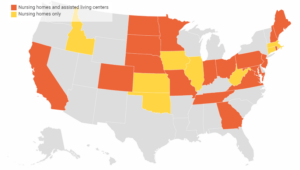
CHICAGO, IL – For millions of American families, the COVID-19 pandemic has restricted families from visiting their loved ones in nursing homes and assisted living centers. Now, as many states begin to roll back strict policies initially put in place when the pandemic began, some families finally have the opportunity to see their loved ones in person.

With new guidance from the Centers for Medicare and Medicaid Services (CMS) and the Centers for Disease Control and Prevention (CDC), nursing homes are allowed to use more creative measures to allow visits from family members.

What States Allow Nursing Home Visitation?

So far, 26 states are starting to allow nursing home visitation, while 18 others are planning similar visitation guidelines for assisted living facilities.

Nursing homes are allowing visitors; however, visitors will have to follow specific guidelines. These guidelines include:

  • Families must schedule an appointment to visit residents in advance
  • Visitors must undergo a temperature check and answer a COVID-19 screening questionnaire
  • Only 1 or 2 visitors can visit at a time
  • Visits must take place outside on a patio or garden area
  • No physical contact such as hugs are allowed
  • All visits will be supervised by a staff member
  • Visitors must practice social distancing by remaining 6 feet away from residents and staff

If a resident or staff member develops COVID-19, then the facility will ban all nursing home visitations. State officials may also implement a no-visitation policy if state officials note a significant rise in COVID-19 cases.

Understanding the Risks of Allowing Nursing Home Visitation

After nearly four months in isolation, many families feel relief knowing they can once again visit their loved ones. Between being isolated and COVID-19, the pandemic has taken a serious toll on the physical and mental health of residents nationwide. Residents have very limited interaction with other residents and staff and are confined to being in their rooms most of the time.

It’s important to understand that while this is step in the right direction, there’s also many risks to visiting your loved one in a nursing facility. Nursing home residents are the most vulnerable to contract COVID-19. Nearly 45 percent of COVID-19 deaths have occurred in long-term facilities.

Many families have expressed their concern over their loved one being neglected or abused during the lockdown. Without their involvement and oversight, families are worried their loved one has not received adequate care.

Learn More about Nursing Home Residents Rights

The COVID-19 pandemic has changed the way everything operates, especially nursing homes; however, nursing home residents still have rights. They have the right to quality care that ensures a safe and healthy life.

If you have concerns regarding the quality of care your loved one is receiving in a nursing home, please contact the experienced attorneys at the Dinizulu Law Group, Ltd. Our legal team will help you understand the rights of nursing home residents and ensure that your loved one gets the care he or she deserves. Even during a pandemic, we want you to know your loved one’s legal rights and know that you are not alone.

If you have any questions, please call our office at (312) 384-1920 for a free consultation or visit our website for more information.

Translate »