Tag Archive for: Illinois

Posts

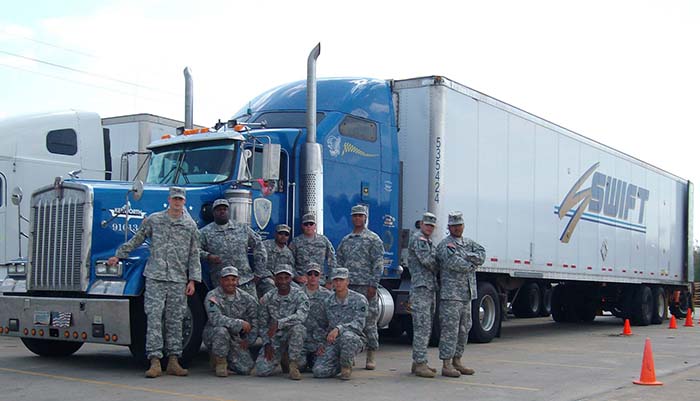
Truck Accidents Caused by Careless Inspections


The law requires trailer and truck drivers to conduct a pre-trip inspection before the start of their route and once every 24 hours while on the road. It is the truck driver’s responsibility to ensure the vehicle they are expected to drive is safe for operation and free from defects. During a pre-trip inspection, the truck driver checks the vehicle’s mechanics, such as brakes, lights, tires, etc. to determine if they are functioning properly. The trucker must also ensure that the load being driven is securely loaded into place. The load must also be at or under the maximum weight capacity that is appropriate for that particular truck.

The driver of a truck should get behind the wheel only after ensuring that the pre-trip inspection trip didn’t reveal any problems with the truck’s operational capabilities and that the truck load is secure. A thorough pre-trip inspection should last between 30 to 50 minutes. While there is no established regulation that addresses the time frame to be allotted for truck and trailer inspection, 30 to 50 minutes is the expected time it takes to complete a thorough inspection. Every truck driver is taught to perform a pre-trip inspection as part of their CDL training, and they must know how to do one properly in order to get a CDL license.

Commercial trailer truck accident

Often times, truck accidents happen because a truck driver missed something during a pre-trip inspection. Truck accidents caused by falling debris from a cargo load are pretty common. Such accidents can be prevented if truck drivers are simply given enough time and support from the trucking industry to perform these life-saving inspections.

But many truck companies ignore safety rules and take shortcuts to protect their bottom lines. Examples include truck drivers not getting paid for the time they spend on inspections, even though it’s part of their required day. As a result, it’s not uncommon to hear of inspections that last only 10-15 minutes. These incomplete and unsafe inspections endanger us all and are a serious threat to public safety.

At the Dinizulu Law Group, Ltd., our Chicago truck accident lawyers investigate thoroughly if a careless or an incomplete truck inspection has caused you or your loved one injury in a truck accident. With over 50 years of combined experience and a reputation for tough litigation, our Chicago truck accident attorneys have the resources and the expertise to help you get the results you deserve. Call us at 1 (312) 384-1920 or 1 (800) 693-1LAW or contact us by email.

Aging Pastor Neglected by His Nursing Home Caregivers


Robert, an aging pastor, who lived a life of service and put others first, was neglected by his care providers in an Illinois nursing home.

Robert was admitted into a nursing home with severe illnesses that required 24-hour care. Robert suffered from Parkinson’s disease, dementia, and dysphasia, among other medical conditions. Dysphasia causes one to have trouble swallowing food and therefore, the person must be monitored closely to ensure proper digestion. Failure to monitor this food intake can cause the person to choke or aspirate, meaning the food gets stuck in the throat or lung.  Because of these risks, Robert should never be allowed to eat alone. What did the nursing home do to monitor these health concerns? Watch the video to learn more.

Just a few weeks after being admitted, a care giver at the nursing home noticed Robert was eating poorly and pocketing food. This is critical because since Robert was pocketing food, he could later eat that food while he wasn’t being watched and could suffocate as a result. The caregiver did absolutely nothing after noticing that Robert was pocketing food, like alerting the doctor or the head nurse.

After a few days, Robert was found to be lethargic with concealed food on him. He developed a cough and congestion, had labored breathing, and a fever. These symptoms worsened.

Finally, the nursing home sent Robert to a hospital. Only after going to the hospital was Robert diagnosed with aspiration pneumonia. You see, Robert had likely ingested the pocketed food that became lodged in his lung, causing the aspiration pneumonia. Aspiration pneumonia happens when substances, such as gastric contents, are inhaled into the lungs. This also creates a bacterial infection in the lung, leading to aspiration pneumonia.

Robert was a total-assist resident, meaning he needed to be fed, clothed, and changed. The nursing home ignored these responsibilities even though they fully understood Robert’s physical and mental limitations when they agreed to admit him into their facility.

Robert’s wife Michelle contacted the administrators at this nursing home to get them to properly care for Robert. They all made promises, yet the same pattern of unreasonable care continued.

I want all families like Michelle’s and all nursing home residents to know that nursing homes are accountable for the promises they make to you. There are remedies when nursing homes do wrong and cause you harm.

I know you may be watching this video because you probably have questions about your own loved one in a nursing home. Contact the Dinizulu Law Group, Ltd. at 1-312-384-1920 or 1-800-693-1LAW. We answer questions like yours every day.

What is the Number One Cause of Truck Accidents?


Driver fatigue is an extremely common problem in the trucking industry. A study done by the Federal Motor Carrier Safety Administration found fatigued drivers are the #1 cause of truck collisions.

When these tired and overworked truck drivers cause accidents, as you may know, these are not minor accidents. Car drivers and passengers who are in a collision with a truck are very likely to suffer serious life-long injuries or even death.

There are rules in place to prevent these deadly accidents. The Federal Motor Carrier Safety Administration regulates the hours truck drivers can spend on the road per day and per week. Watch the video to learn more.

The law is that truck drivers can work:

  • A maximum of 70 hrs. in 8 days if their employer operates every single day of the week.  If the employer is closed any day of the week, then truck drivers can work up to 60 hrs. in 7 days.
  • Within these 60 or 70 hrs in about a week, truck drivers must only work a maximum of 14 hrs. per day. Only 11 of these 14 hrs. can be behind the wheel. After a truck driver has driven the maximum of 11 hrs., they must rest for 10 hrs. straight before starting work again.
  • After working for 8 days or 7 days as per the limit of days that applies to them, truck drivers can only restart work after resting for 34 hrs.

These safety rules were created based on many studies that examined the needs of truck drivers so that they can be alert on the road. They are safety rules that every trucking company should live by to protect us all from danger and mayhem. But many companies force their drivers to skirt these safety rules. Truck companies oftentimes push their drivers to work past the set driving limits in an effort to take shortcuts. This undermines the safety of us all. It creates an environment of fatigued and stressed drivers who are high risks on the road. These exhausted drivers end up injuring not just themselves, but our community members who will suffer more severe and oftentimes irreversible injuries or death.

Truck driver fatigue continues to harm individuals and their families. If you are watching this video because you have your own questions or have a loved one injured due to a fatigued truck driver, you shouldn’t feel alone. Contact the Dinizulu Law Group, Ltd. at 1-312-384-1920 or 1-800-693-1LAW. We are here to answer all your questions and help you navigate through this difficult time.

Hate Crimes Are Rising Fast. What Can You Do?


The FBI just released that 2016 was the second year in a row that hate crimes have gone up nationwide. 2017 may be the third.

In Chicago, Illinois, there have been 39 hate crimes just in the first half of 2017. The Police Department has been keeping electronic records of hate crimes since 2012. Since then, Chicago’s on the pace to hit a record high of hate crimes by the end of 2017. This shouldn’t be the pattern the nation or our city should be facing. Want to know how you can fight this disturbing trend? Watch the video to learn more.

Illinois citizens are protected under the state’s hate crime act which states:

Hate crime occurs whether the person who commits it does so by reason of the actual or perceived race, color, creed, religion, ancestry, gender, sexual orientation, physical or mental disability, or national origin of another individual or group of individuals.

Effective of Jan 1, 2016 transgendered people are also protected under this law. Gender identity is now a protected provision under sexual orientation. The new law also extends protections to institutions who may be targeted because of sexual orientation or gender identity status.

Because of these protections, I was able to help a lesbian woman Danielle, who was assaulted by an apartment building security guard. The assault took place on the common grounds of Danielle’s girlfriend’s apartment complex. The security guard had continuously harassed the couple because of their lesbian status.

One night while Danielle was sitting on the steps saw alone talking on the phone, the security officer standing over six feet tall and weighing almost 285 pounds approached Danielle who stood 5’1, and weighed a mere 110 pounds.  After Danielle asked the security officer to remove the light from her eyes, he turned it off and struck Danielle on her temple with the flashlight, while uttering a gay slur at her.

He later offered a defense that Danielle looked like a boy.  Our civil right attorneys in Chicago identified other witnesses who came forward to support this animus the security guard had towards the lesbian community. As a result, this case settled with significant compensation for Danielle.

As hate crime and violent lashing out has become increasingly common, know that there are remedies and legal protections for such wrongful behavior, both criminal and civil.  Many times, people don’t come forward because they are not sure whether what happened to them is a hate crime, or people aren’t sure if the law will guarantee them protection. But it always helps to discuss these matters with a professional and experienced civil rights trial attorney.

The Dinizulu Law Group, Ltd. has won over seven figures for cases involving discrimination & civil rights cases.  If you are watching this video because you have your own questions or concerns about hate crime, civil rights or discrimination, call us at 1-312-384-1920 or 1-800-693-1LAW. Our Chicago-based civil rights lawyers are here for you.

One Foster Child Threatens Another – What Happened Next?


There are thousands of children and young adults livings in independent living environments facilitated by professionals. Many of these children have lost their parents to death and drugs to no fault of their own. These children and young adults have been in foster and group homes — and so many have faced unbearable abuse. When our state funds these foster, group homes and private independent living institutions, we expect that these caretakers are attentive and helpful to the needs of these children and young adults. The providers in this case failed in this sacred duty and were examined by state investigators. Watch the video to learn more.

At this facility, my client Tammy and a fellow resident Barbara didn’t get along. In fact, there was a long history of altercations between the two. One altercation turned violent resulting in the arrest of 17 year old child Barabara. While being arrested in front of her care takers Barbara yelled to Tammy my client, “I’m going to get your key and get you.”

This Barbara had lost a lot in her life and was suffering from mental health illnesses and was on psychotropic medication. Barbara had been deemed by DCFS staff as particularly violent. After three months, Barbara was released from jail.

Then, this unstable minor returned to her independent living community and tricked the manager of this institution into giving Barbara, Tammy’s keys. Barbara this disturbed young child in the middle of the night entered Tammy’s home with this key, grabbed a knife and stabbed Tammy to death.

Tammy’s distraught siblings contacted me. Our Chicago wrongful death attorneys investigated the matter and learned that the independent living institution was to meet Barbara at release, but they did not show up in time.  Being concerned, one of the social workers called her manager to inform her that she was concerned for my client Tammy’s safety. You see this social worker witnessed the threat Barbara made to Tammy. We also uncovered that the entire independent living institution should have been aware that a DCFS social worker indicated that Barbara would someday kill someone.

We also were able to prove that the manager that turned over the wrong key, failed to follow the known procedures of checking the room key with the person’s name. Compounding this error, the manager failed to follow-procedure and remove Tammy from the impending danger.

No one should ever have access to your apartment without your consent, especially not a sworn enemy who in front of the police threatened to get you. After uncovering the evidence of institutional failures, this case settled for a significant amount for the death of Tammy.

If you have a question about abuse or neglect in a foster or group home, or in an independent living environment, you may need an experienced wrongful death lawyer or personal injury trial attorney. Based in Chicago, the Dinizulu Law Group, Ltd. handles these matters all the time. Contact our office at 1-312-384-1920 or 1-800-693-1LAW.

18-Year-Olds Now Allowed to Drive 18-Wheelers

Last year, the Federal Motor Carrier Safety Administration, which monitors safety regulations for the trucking industry introduced a three-year pilot program to allow 18-21 year-old drivers haul large trucks and tractor trailers across state lines. Why is this considered a good idea?

According to the CDC, teen drivers are already disproportionately prone to fatalities when driving cars, and 18 to 21-year-olds are already allowed to drive trucks, but not across state lines. This law based on state line restrictions is an arbitrary way to control how long a teen truck driver can be on the road. For example, a drive from Chicago to Southern Illinois may well be over 300 miles, while a much shorter drive from Chicago to Gary, Indiana is about 30 miles. The latter of these two drives is not allowed for teen truck drivers because they would be crossing state lines. However, it is just as risky, if not more so, when teenagers are allowed to haul large vehicles for the longest of distances within their states. Therefore, it would be safer for everyone if teen truck drivers would be limited to driving a set number of miles rather than being restricted on crossing state borders.

The new pilot program limits truck drivers under 21 to drive 100 miles into neighboring states, but this policy still has its flaws. This pilot program begs the question for how long would these teen drivers be driving in total? If a teen truck driver is traveling 100 miles in the neighboring state, this is in addition to what distance driven from the home state to get to the neighboring state?

Furthermore, the pilot program is using a very selective sample as a generality for the average teen truck driver. The 18 to 21-year-olds selected for the pilot program are military veterans who drove trucks as part of their service. The problem with using this sample group is that most of these veterans would be 21 or closer to 21, because the military starts to admit recruits at 18 years of age.

teenage truck driver

Another problem is that it’s very different working for the nation’s security as opposed to a for-profit trucking company that’s looking out for its bottom line. When rushed by their customers and bosses, young truck drivers are more likely to make deadly mistakes. Eric Penucci, a veteran truck driver interviewed by NPR said, “There’s a lot of stress in the trucking business. All customers are in a hurry to get their stuff. Traffic causes delays. Truck drivers need to be experienced, calm under pressure, and able to make good decisions.”

The trucking industry is facing a shortage of drivers, which may only get worse. Older and experienced drivers are retiring or leaving the industry altogether. Future truck drivers may be overworked, underage, and less-knowledgeable on roadway safety. These factors create fatalities on our highways that will only grow unless safer policies are put in place.

I am a truck accident lawyer in Chicago and often times I am dealing with the tragedy these accidents bring to families and communities. If you or your loved one was injured in an accident involving a truck you shouldn’t feel alone. Get the help and legal representation that will help you or your loved one move forward. Committed to your needs, our truck accident attorneys understand what you may be going through. The Dinizulu Law Group, Ltd. is available to answer all your questions and help you navigate through this difficult time. Our number is 312-384-1920 and 1-800-693-1LAW, or reach us by email at info@dinizululawgroup.com.

Cars Have Gotten Safer. Have Trucks?


The Insurance Institute for Highway Safety has reported that over the past few decades cars have gotten safer and fatalities have gone down. This trend can be linked to advances in safety features, such as airbags, electronic stability control, and anti-lock brakes, among other technical advances.

While this same technology is also available for trucks and trailers, the trucking industry hasn’t implemented such safety equipment. In United States, only about 3% of the Class 8 trucks—the heaviest ones which includes most tractor-trailers—are equipped with any collision-avoidance technology. In Europe, most such heavy trucks are sold with this technology.

These large trucks are disproportionately involved in fatal accidents. According to the New York Times, these heavy trucks are involved in 1 out of 8 of all fatal accidents and 25% of all fatalities in construction-zone accidents.

The trucking industry claims the cost of these safety technologies hurt their bottom line. The trucking industry, through its chief trade group, the American Trucking Association, continues to lobby Congress against safety laws, claiming expenditures on safety technology will raise rates for shippers and consumers.

Policewoman directs traffic after a truck accident

But what the trucking industry has failed to notice is that stronger safety measures prevent higher insurance rates and also prevent millions of dollars from being spent in resolving injury claims. The Centers for Disease Control and Prevention also estimates $99 billion  to be the annual cost to the economy for truck and large vehicle crashes.

Many of these expenditures can be avoided if Congress were to pass a common-sense safety bill that addresses the concerns of car drivers, truck drivers, and creates a trucking industry that is safer and more profitable in the long run.

At the Dinizulu Law Group, Ltd., we are safety advocates. Those who injure others through their careless actions must be held accountable for their wrongdoing. That is why our team of truck accident lawyers in Chicago has your back. With over 50 years of combined experience, we know the strategies the defense will use to discredit your injuries. But we bring commitment and expertise to each case and help you get results. Set up a free initial consultation with one of our truck accident attorneys in Chicago. Call 1 (312) 384-1920 or 1 (800) 693-1LAW, or reach us by email.

How Serious Are Bed Sores For Nursing Home Residents?

For our aging loved ones, bed sores can be a serious and even deadly affliction. Also known as decubitus ulcers or pressure sores, bedsores can range in severity from superficial skin wounds to deep ulcers that expose bone. As though deep skin ulcers were not a severe enough issue, the Mayo Clinic describes complications that may arise from bed sores including:

  • Sepsis – a life threatening condition that may result in organ failure
  • Cellulitis – an infection of soft tissues causing pain, redness and swelling
  • Bone and Joint Infections – an infection that resides deep in the bones resulting in reduced limb function
  • Squamous Cell Carcinoma – a cancer that results from wounds that will not heal

In addition to the terrible pain and debilitating wounds, each bed sore complication described above can result in death. It is oftentimes difficult for elderly individuals to heal effectively, thus preventing bed sores can be a life or death matter.

Are Bed Sores Preventable?

As the name implies, pressure sores are caused by pressure on the skin. This pressure ultimately reduces blood flow resulting in a breakdown of the tissue. In addition to sustained pressure on the skin, friction and shear can be contributing factors as well. For example, a nursing home resident in an adjustable bed that tilts up or down may experience shear as the bed adjust against their body weight. If a nursing home caretaker handles an individual too roughly, the friction may be enough to damage skin that is already frail.

Nursing home resident & staff

Data provided by the Centers for Disease Control and Prevention indicate that 11% of residents in nursing homes may have bed sores. Sometimes bedsores occur in nursing home residents despite good efforts, but there are still measures a nursing home care taker should follow to prevent bed sores. For example, encouraging the proper movement in residents with limited mobility is crucial to preventing bed sores. If an individual is bedridden or wheelchair bound, the patient must be repositioned every couple of hours.

What To Do If Your Loved One Develops Bedsores While in a Nursing Home?

While we hope that our aging or disabled loved ones would be treated properly in a nursing home, we know that oftentimes this is not the case. Unfortunately, many nursing homes fail their residents and let them fall victim to neglect or abuse, resulting in bedsores or far worse outcomes. As skilled nursing home neglect attorneys in Chicago, the Dinizulu Law Group, Ltd. knows what the standard of care is for Illinois nursing homes. With over 50 years of combined experience, our nursing home abuse lawyers hold caregivers accountable for the injuries they have caused their residents.

Contact us by email or call us at 1-312-384-1920 or 1-800-693-1LAW to schedule a free consultation. Our nursing home abuse attorneys can build a case that brings justice and compensation for your injured loved ones.

I Was Assaulted While Celebrating My Engagement


Pamela Dixon was celebrating her engagement in a public park when suddenly she was assaulted by the park’s security guard.  Left injured and confused, she didn’t know what to do.  When she contacted the employer of the security guard about the assault, it was as if the incident didn’t happen, and that she didn’t matter.

Pamela wanted justice and wanted the truth to be told.  She trusted her friend Attorney Yao Dinizulu to get her the results she deserved.  The Dinizulu Law Group, Ltd. investigated and uncovered that this security guard had a pattern of violent behavior. Yet scenario after scenario, she wasn’t terminated.

Before this case, Pamela had also never given a deposition.  A deposition is something that’s intimidating for many clients because they have to give a sworn and recorded statement to the opposing counsel who are trying to catch the client say something they can later use against them in the course of trial.  The Dinizulu Law Group, Ltd. helped Pamela understand the types of questions that would be asked during a deposition, and prepared her thoroughly for the challenge ahead.

As a result, Pam was able to receive compensation for her pain suffering, medical bills, and most importantly get a closure to the emotional distress that this incident caused. She didn’t want others to go through what she had gone through.  The Dinizulu Law Group, Ltd. helped Pamela tell her story and seek justice.  That meant something.

Hate crime and violent lashing out has sadly gotten increasingly common.  However, there are laws to remedy these wrongs and punish those who violate our nation’s laws.  If you believe your civil rights have been infringed upon, contact the Dinizulu Law Group, Ltd. at 1-312-384-1920 or 1-800-693-1LAW or by email. We are here to help. You will also find other stories like Pam’s and more discussions on civil rights and other legal topics on our media page.


Protect Loved Ones from Nursing Home Neglect

Recognize Dehydration

Dehydration is a serious, potentially fatal risk that is faced by elderly residents of nursing facilities. In a recent study, 31% of residents in nursing homes who were examined were found to be dehydrated. This can be caused by medications and certain conditions such as diabetes, but is also a result of changes in the body that occur as people age. Luckily the early stages of dehydration are easy to treat, and by being aware of the symptoms dangerous medical problems can be avoided.

Mild to Moderate Dehydration

The symptoms of mild to moderate dehydration tend to be fairly innocuous individually, so it is important to take note if you notice several of them occurring at once. Loved ones may seem sleepy or irritable, complain of headaches, dizziness or cramping in their arms and legs. More specific symptoms are a dry, sticky feeling in the mouth and dry skin. Most importantly, as a person becomes dehydrated, his or her need to urinate disappears as the body tries to conserve liquids. If someone cannot remember the last time he or she urinated, chances are it was too long ago and more fluids are required. When a person who is dehydrated does pass urine, it will be of a dark color – the darker the color typically the more dehydrated the person is.

Severe Dehydration

As a person becomes progressively more dehydrated, additional symptoms begin to appear. The mucous membranes dry out and the patient begins to develop sunken eyes. Skin will also begin to lose its elasticity. In the last stages the patient can develop low blood pressure, fever, and a rapid heartbeat and breathing difficulties. Serious, potentially fatal complications can occur from long-term or severe dehydration, including heat exhaustion or heatstroke, cerebral edema (swelling of the brain), seizures, kidney failure and comas.

Severe dehydration is an emergency. It is potentially lethal and requires immediate medical attention, especially in elderly and pediatric patients. If you suspect that you or a loved one is showing symptoms of severe dehydration, contact a medical professional as soon as possible.

Illinois Nursing Home Neglect and Abuse Attorneys

If you or your loved one has suffered from dehydration while in a nursing home, you or your loved one could be entitled to recover monetary compensation for your expenses, injuries, and suffering. The experienced and compassionate attorneys at the Dinizulu Law Group, Ltd. will work with you to determine the best way to handle your nursing home abuse or neglect claim. Email us or call us at 1-312-384-1920 or 1-800-693-1LAW to set up a free consultation with one of our experienced nursing home abuse and neglect attorneys in Chicago.

Translate »