Tag Archive for: Chicago IL attorney

Posts

What Types of Evidence Is Used for Nursing Home Neglect and Abuse Cases?

CHICAGO, IL – More than 1.2 million people are living in nursing homes across the United States. Residents may live in a nursing home facility because they need help with daily tasks such as eating and bathing or may have long-term medical needs that families and other means cannot provide their loved one with. Many nursing home residents suffer from mental or physical disabilities that reduce their level of independence; therefore, nursing home staff must keep them as healthy and safe as possible.

Unfortunately, some nursing home residents are not treated with compassion and the competent medical attention they deserve. If you or your loved one has been a victim of abuse or neglect, you may want to bring a personal injury claim against the facilities and those who harmed you or a loved one. In order for your claim to be successful, you must show evidence of the nursing homes wrongdoing.

Elements of a Nursing Home Claim

To hold a negligent nursing home accountable and recover financial compensation for the abuse and/or neglect, you and your personal injury attorney will need to prove that:

  • The nursing home owed a duty to you or your loved one
  • The nursing home breached that duty
  • You or your loved one was injured as a result
  • The injuries resulted in damaged and/or financial costs

It can be hard to know exactly how a nursing home resident was injures – especially for those who suffer from a mental disability such as dementia or Alzheimer’s which affects their memory and cognition. To fully understand the circumstances, your personal injury attorney may gather evidence such as:

  • Care logs
  • Medical records and bills
  • Operating procedures, hiring practices, and staff training schedule
  • Surveillance footage
  • Photographs
  • Insurance claim documents
  • Testimony from witnesses
  • Testimony from “expert witnesses” such as medical professionals

Contact a Cook County Nursing Home Abuse Injury Attorney

Nursing homes have both an ethical and legal obligation to provide residents with the adequate everyday care and medical attention they need; however, sometimes they fall short. If a nursing home caused a resident to be injured due to their negligence or being intentionally abusive, the injured person may file a personal injury claim. To learn more about bringing a nursing home injury lawsuit against a negligent facility, contact the Dinizulu Law Group at (312) 384-1920 to schedule a free consultation with an experienced Chicago personal injury attorney. Visit our website for more information.

Nursing Homes & Their Response to Residents with Dementia

CHICAGO, IL – Close to two-thirds of all US nursing home residents have some type of cognitive impairment, such as dementia, and the quality of care and quality of life of these people have been long called into question. Dementia denial from caregivers is real and dangerous, especially in a nursing home setting. Dementia diagnoses can also be missed when staff members are overworked, and poorly resourced care teams do not receive adequate training to evaluate struggling residents that may require extra supervision and management of medications, daily activities, and financial needs.

Signs of Dementia

It is important to know the signs of dementia to know when a resident should be moved from a nursing facility to move to a 24-hour assisted specialized living environment to keep them safe.

  1. Early Stage Memory Loss

One of the most common and prominent signs of dementia, especially in early stages, is forgetting information such as important dates or events, and asking the same questions repeatedly. Those who are in the early stage tend to have an increasingly need to rely on others to recall facts, people, or routines.

  1. Inability to Concentrate and Conversate

Some people who suffer from dementia may experience changes in their ability to concentrate and follow a plan or conversation. They may have trouble keeping up with the conversation or become confused. They may also begin to struggle with naming familiar objects, such as calling a “bed” a “table.”

  1. Falls Occur

Those with dementia have an increased likelihood of increased falls and hip fractures. Falls can happen when staff are not following protocol, such as needing two people present to move a resident from their wheelchair to bed. Severe bone fractures and traumatic brain injuries (TBI) are both common fall injuries that can lead to a decline in a person’s health.

  1. Wandering and Elopement

Six out of 10 people who suffer from dementia will wander and aimlessly attempt to move around the facility without regard for their personal safety. The National Council of Certified Dementia Practitioners (NCCDP) have identified different types of wandering; such as, environmentally cued wandering, recreational wandering, agitated purposeful wandering, fantasy or reminiscent wandering, and elopement. According to NCCDP, elopement is the most dangerous type of wandering and occurs when a patient attempts to leave the nursing home altogether and wander outside.

  1. Growing Difficulty with Simple Tasks

As dementia progresses, the ability to perform daily tasks such as bathing, eating, getting dressed, and socializing decreases.

  1. General Confusion Over Visits and Appointments

As stated early, those who suffer from dementia begin to lose track of important dates and events, like holidays, or forget a family member is coming to visit. They begin to start struggling to understand where they are, why they are there, and how they got there.

  1. Misplacing Items

Your loved one may begin to lose items or put them in an unusual place. They likely will not be able to retrace their steps as their memory decreases. They may also accuse others of stealing or misplace important personal items, especially as the disease progresses.

  1. Changes in Mood, Personality, and Sound Judgement

Individuals may experience difficult changes in judgement and decision making. Mood and personality changes can happen to someone with dementia and early-stage Alzheimer’s. Individual’s become easily confused, fearful, suspicious, anxious, or depressed.

Nursing Homes Response to Residents with Dementia

In a recent study published by the US National Library of Medicine National Institutes of Health, residents with dementia or Alzheimer’s are at a greater risk of experiencing abuse. Abuse can exist in many forms such as caregiver neglect, psychological abuse, physical abuse, emotional abuse, abandonment, self-neglect, sexual abuse, and financial exploitation.

The most common facilitators were the introduction of policies and programs in the facility, education, and working conditions. The most cited barriers were poor training, working conditions in a long-term care setting, and a lack of research. The growing population could increase this problem exponentially, researchers stated.

Current abuse continues because of detection and prevention issues; however, another issue is that 80 percent of elder abuse goes unreported.

How to Prevent Abuse

The best way to prevent and abuse is to keep yourself educated of the sign and symptoms so you know what to look for, and attentively listen to residents, especially those who are most vulnerable that suffer from dementia or Alzheimer’s. By creating a culture in which nursing home staff members report all suspected abuse, organizations are able to increase their chances of identifying and rectifying abuse behaviors quickly.

Facilities need to offer training and better screening processes for employees to identify and recognize resident issues. They must also diligently hire staff who are fit to care for older adults and train staff to recognize and report suspected abuse. Dementia professionals must also be educated and on high-alert to the risks associated with dementia-ridden residents and their likelihood of being exposed to abuse and neglect.

Contact an Experienced Nursing Home Abuse Attorney

It can be difficult and traumatic to discover that you or a loved one is suffering from dementia or Alzheimer’s and are unsure about your future. If you suspect your loved one is being neglected or abused due to suffering from a cognitive impairment, the Dinizulu Law Group will help you understand common situations and signs that something is wrong.

The Dinizulu Law Group, Ltd. has extensive knowledge and resources in this area of the law and provide highly personalized service by working closely with clients throughout every step of the process. Our attorneys have represented hundreds of individuals and families in making claims against abusive nursing home facilities and have helped them receive the compensation they deserve. Please call our office to schedule a free consultation at (312) 384-1920 or visit our website for more information.

Some States Begin to Allow Nursing Home Visitation

CHICAGO, IL – For millions of American families, the COVID-19 pandemic has restricted families from visiting their loved ones in nursing homes and assisted living centers. Now, as many states begin to roll back strict policies initially put in place when the pandemic began, some families finally have the opportunity to see their loved ones in person.

With new guidance from the Centers for Medicare and Medicaid Services (CMS) and the Centers for Disease Control and Prevention (CDC), nursing homes are allowed to use more creative measures to allow visits from family members.

What States Allow Nursing Home Visitation?

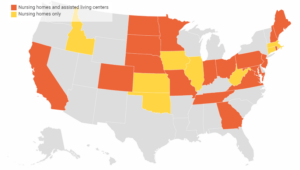
So far, 26 states are starting to allow nursing home visitation, while 18 others are planning similar visitation guidelines for assisted living facilities.

Nursing homes are allowing visitors; however, visitors will have to follow specific guidelines. These guidelines include:

  • Families must schedule an appointment to visit residents in advance
  • Visitors must undergo a temperature check and answer a COVID-19 screening questionnaire
  • Only 1 or 2 visitors can visit at a time
  • Visits must take place outside on a patio or garden area
  • No physical contact such as hugs are allowed
  • All visits will be supervised by a staff member
  • Visitors must practice social distancing by remaining 6 feet away from residents and staff

If a resident or staff member develops COVID-19, then the facility will ban all nursing home visitations. State officials may also implement a no-visitation policy if state officials note a significant rise in COVID-19 cases.

Understanding the Risks of Allowing Nursing Home Visitation

After nearly four months in isolation, many families feel relief knowing they can once again visit their loved ones. Between being isolated and COVID-19, the pandemic has taken a serious toll on the physical and mental health of residents nationwide. Residents have very limited interaction with other residents and staff and are confined to being in their rooms most of the time.

It’s important to understand that while this is step in the right direction, there’s also many risks to visiting your loved one in a nursing facility. Nursing home residents are the most vulnerable to contract COVID-19. Nearly 45 percent of COVID-19 deaths have occurred in long-term facilities.

Many families have expressed their concern over their loved one being neglected or abused during the lockdown. Without their involvement and oversight, families are worried their loved one has not received adequate care.

Learn More about Nursing Home Residents Rights

The COVID-19 pandemic has changed the way everything operates, especially nursing homes; however, nursing home residents still have rights. They have the right to quality care that ensures a safe and healthy life.

If you have concerns regarding the quality of care your loved one is receiving in a nursing home, please contact the experienced attorneys at the Dinizulu Law Group, Ltd. Our legal team will help you understand the rights of nursing home residents and ensure that your loved one gets the care he or she deserves. Even during a pandemic, we want you to know your loved one’s legal rights and know that you are not alone.

If you have any questions, please call our office at (312) 384-1920 for a free consultation or visit our website for more information.

Hyundai, Kia Agree to $758 Million Engine Fire Class Action Settlement

CHICAGO, IL – Hyundai and Kia have reached a $758 million settlement with car owners who claim that their vehicles suffer from premature engine failure which has caused cars to burst into flames. The class action lawsuits allege that the car companies were aware of the defect but did not disclose this information to customers. The settlement includes nearly 4.1 million car owners who bought a number affected vehicles.

According to the motion for approval of the class action settlement, the vehicles that are part of this Class include: “all 2011-2018 and certain 2019 model year Hyundai Sonata vehicles, all 2013-2018 and certain 2019 Hyundai Santa Fe Sport vehicles, all 2014-2015, 2018, and certain 2019 Hyundai Tucson vehicles, all 2011-2018 and certain 2019 Kia Optima vehicles, all 2011-2018 and certain 2019 Kia Sorento vehicles, and all 2011-2018 and 2019 Kia Sportage vehicles originally equipped with or replaced with a genuine Theta II 2.0 liter or 2.4 liter gasoline direct injection engine within OEM specifications.”

Due to defects highlight in the settlement agreement, Hyundai and Kia cars reportedly caught fire, resulting in personal injury claims such as property damage and/or physical injury. In extreme circumstances, the defects resulted in houses and/or garages being burned down.

Holding auto manufacturers liable for defective vehicles is never a simple task.  At the law office of the Dinizulu Law Group, Ltd., we take on tough cases against large corporations, and we know how to fight for your right as a consumer. Call (312) 384-1920 or contact us on our website for a free consultation with a Chicago personal injury attorney.

Sepsis Complications: How Nursing Homes Should Prevent & Treat

CHICAGO, IL – Infections are one of the leading causes of death in nursing homes throughout the country. Unfortunately, nursing homes can be inattentive to the conditions that give rise to infections and then leave the infections untreated, putting nursing home residents at risk.

An infection that is left untreated can turn into a very dangerous condition called sepsis. When someone develops septic shock, this is how an infection can kill. Sepsis happens when an infection you already have – in your skin, lungs, urinary tract, or somewhere else – triggers a chain reaction throughout your body. A toxic agent is introduced into the bloodstream because of the infection and will begin to result in organ failure. If you do not seek medical treatment in a timely manner, sepsis can rapidly lead to tissue damage, organ failure, and death.

There are numerous symptoms that may occur, with some of the more severe ones including:

  • Abnormal heart function including a very rapid heart rate
  • Significant pain and discomfort
  • Difficulty breathing
  • Disorientation or delirium
  • Unconsciousness

The Stages of Sepsis

Stage One: Systemic Inflammatory Response Syndrome (SIRS)

Sepsis can be difficult to identify but is typically denoted by a very high or low body temperature, high heart rate, high respiratory rate, high or low white blood cell count and a known or suspected infection. For sepsis, two of the mentioned SIR signs, as well as an infection, must be present.

Stage Two: Severe Sepsis

Severe sepsis is diagnosed when acute organ dysfunction begins. Severe sepsis can be diagnosed when sepsis is present along with hypotension, or low blood pressure, or hypoperfusion, the decreased blood flow through an organ.

Organ dysfunction can be characterized by symptoms such as a sudden change in mental state, decreased urine output, decreased blood platelet count, difficulty breathing, abnormal heart pumping function and abdominal pain.

Stage Three: Septic Shock

Septic shock is the most severe stage of sepsis. Septic shock is defined as the presence of hypotension, induced by sepsis, despite fluid resuscitation. Septic shock has the highest chance of mortality, with estimates that range from 30% to 50%.

Symptoms of Septic Shock

Septic shock is accompanied by the following symptoms:

  • Little to no urination
  • Blood clots throughout the body that can lead to organ failure
  • Very low or high temperature
  • Extremely low blood pressure
  • Palpitations

Even if the nursing home resident is about to survive septic shock, it will have long-term ramifications on their health and they likely will not make a full recovery.

Early detection of sepsis is necessary in order for a nursing home resident to have a better chance at survival; however, when a resident is a victim of nursing home neglect, they likely are not receiving the care that they need to notice the signs of sepsis and begin prompt treatment. This becomes more of a problem at understaffed nursing homes that are prone to neglect.

Medical Treatment for Patients with Sepsis

When a nursing home does diagnose and treat sepsis, the course of treatment begins with antibiotics. Some patients may need to have procedures to remove dead skin or tissue depending on the severity of the infection. Patients may also need oxygen or other intravenous fluids to maintain the level of oxygen and blood going to the organ so organ failure can be prevented. Patients can recover from mild sepsis in about three to ten days; however, more severe cases can take longer to recover if the patient is able to survive at all. Severe sepsis requires critical care for a month or more.

Sepsis and Pressure Ulcers

Sepsis is also how pressure ulcers can become fatal. There are four stages of a pressure ulcer: Stage I and II is the first discoloration of the skin and a small ulcer. Stage III is when a small crater in the skin begins to degenerate to a Stage IV pressure ulcer where the hole in the skin gets deeper and can reach the muscle. When the hole in the skin becomes large enough and is untreated, the resident can develop sepsis from the infection. A pressure ulcer can become septic, though the ones that are more advanced have a higher change of becoming infected. The wounds can leak puss and give off a foul smell. There can also be an increased in pain in the area and a fever.

Pressure ulcers should not form in the first place, but if they do, they should not reach the level of sepsis. If your loved one has developed sepsis, there is a high chance that the nursing home did not provide the level of care that it was legally obligated to, causing your family member to develop a life-threatening infection.

Nearly 25,000 residents in nursing homes will die from sepsis, and most of these deaths are preventable. Thousands of nursing homes each year are cited by the federal government for their failure to prevent and treat pressure ulcers.

Has Your Loved One Been Injured by a Nursing Home’s Failure to Treat an Infection? Get Legal Help Now

The experienced attorneys at the Dinizulu Law Group have handled numerous cases over the years where nursing home residents have died from infected pressure ulcers and other severe infections due to nursing home negligence. If your loved one has been injured or died from neglect at a nursing home, call us today at (312) 384-1920 to set up your free consultation. Please visit our website for additional information.

Motor Vehicle Fatality Rates Jump Despite Quarantines

CHICAGO, IL – There has been much less traffic on the roads because of the novel coronavirus that has resulted in the closing of non-essential businesses and stay-at-home orders that have been in place since mid-March. There has been a reduction in car crashes; however, in some places the number of deaths from car accidents has decreased while others have increased.

Pandemic Traffic Crash Statistics
Some cities and states have seen a significant increase in dangerous car crashes during the pandemic. Through the first three months of 2020, the following states have experienced notable increases in the number of roadway deaths: Arkansas (16%), California (8%), Connecticut (42%), Illinois (11%), Louisiana (23%), Nevada (10%), New York (17%), North Carolina (10%), Oklahoma (9%), Tennessee (6%), and Texas (6%).

States with notable decreases include: Arizona (-4%), Hawaii (-32%), Idaho (-28%), Iowa (-13%), Maryland (-13%), Michigan (-12%), Oregon (-24%), and South Carolina (-12%).

Many people die from roadway accidents, especially during holiday weekends. The National Safety Council (NSC) estimated over Memorial Day weekend that 366 may die on U.S. roads. If the estimate holds, it will be the lowest number of fatalities for the holiday period since 2014.

Reasons for an Increase in Accidents
Reports indicate speeding has increased significantly since traffic has lessened. Some states are moving towards “ill-advised” roadway tactics intended to address the pandemic such as repealing requirements for teen drivers to pass road tests before acquiring licenses and relaxing hours of service rules for commercial vehicle drivers.

Distracted driving may also be more prevalent since there is less traffic, so drivers get a false sense of security and begin to use less caution. Drivers figure they have more time to react, so its OK to look at their cellphone.

“What really strikes me is the incredible speed of the changes we’re seeing on a roadways,” Ken Kolosh, manager of statistics at the National Safety Council, told NPR. “Looking at other recessions what you usually see is a decrease in the number of deaths, or the injuries and fatality rate holding steady or decreasing slightly.”

Driver Precaution
Practicing defensive driving is always important, and it is particularly important during the pandemic, as drivers may be much more reckless. To help ensure safer roads, NSC urges people to do the following while on the road:

  • Follow state and local directives and stay off the roads if officials have directed you to do so; many states are asking drivers to stay home unless it’s an emergency situation or for essential errands
  • Obey speed limits, even if roads are clear and traffic is light
  • Practice defensive driving: Buckle up, designate a sober driver if you’re going out drinking or arrange alternative transportation, get plenty of sleep to avoid fatigue, and avoid distractions
  • Be aware of increased pedestrians and bicycle traffic as people turn more to walking and biking to get out of their house safely during quarantine
  • Stay engaged with teen drivers’ habits and practice with them frequently (tips available here)
  • Organizations and employers are encouraged to join the Road to Zero Coalition, a group committed to eliminating roadway deaths by 2050

NSC collects fatality data monthly from all 50 states and the District of Columbia and uses data from the National Center of Health Statistics, so deaths occurring within one year of the crash on public and private roadways–such as parking lots and driveways–are included in the estimates. NSC motor vehicle crashes and estimates for each state can be reviewed here.

Injured in an Auto Accident? Our Licensed Attorneys Can Help

If you suffered injuries in a car crashed caused by someone’s negligence, or you lost a loved one in an accident, please call the Dinizulu Law Group for a free consultation. We may be able to help you seek compensation for your damages. With more than 50 years of experience, our legal team has protected and brought justice to victims and their families through Chicago and Illinois. Due to the statute of limitations, it’s important you inquire with an experienced attorney immediately to preserve your legal rights. For a free consultation, call (312) 384-1920 or visit our website for more information.
Ahmaud Arbery: Witness Says Before Shooting the McMichaels Hit Him with Their Car

CHICAGO, IL – The three white men who are accused of killing Ahmaud Arbery faced a Glynn County judge Thursday morning for their preliminary and bond hearings. Arbery, an unarmed black man, was being pursued by Travis and Gregory McMichael, two white man, when he was gunned down while jogging on February 23 near Brunswick, Georgia.

A 28-second cell phone video of Arbery being shot and killed flooded social media platforms months later and the public called for the McMichaels to be arrested. On May 5, officials with the Georgia Bureau of Investigations secured search warrants to arrest the McMichaels on murder and aggravated assault charges. On May 21, the man who filmed the killing, William “Roddie” Bryan, was arrested on felony murder charges.

The three men engaged in an elaborate chase, hitting the 25-year-old jogger with a truck as he tried to escape them. Richard Dial, GBI Assistant Special Agent in Charge, was asked whether he believed McMichael could’ve been acting in self-defense, he said it was Arbery who was defending himself.

“I believe Mr. Arbery was being pursued, and he ran until he couldn’t run anymore, and it was he turned his back to a man with a shotgun or fight with his bare hands against the man with the shotgun. He chose to fight,” Dial said according to CNN. “I believe Mr. Arbery’s decision was to just try to get away, and when he felt like he could not escape he chose to fight.”

As Travis and Gregory McMichael attempted to head him off, Arbery then turned and ran past the truck of Bryan who struck Arbery with the side of his truck. Investigators found a swipe from a palm print on the rear door of Bryan’s truck, cotton fibers near the truck bed that are attributed to contact with Arbery, and a dent below the fibers.

Arbery’s last moments emerged amid a week of nationwide protests over another killing – of George Floyd by police in Minneapolis – and demonstrators have called for justice in Arbery’s case.

Dial also testified that there were numerous times on social media that McMichael used the same slur words to describe people of color. Dial did not say which McMichael he was referring to and was not asked to clarify.

The Justice Department has launched a hate crime investigation in this case. With tensions already running high in Brunswick and the rest of the country, Georgia Governor Brian Kemp said the state will do “whatever is necessary to keep the peace.”

Two Autopsies Find George Floyd Died by Homicide, but Differ on Key Details

CHICAGO, IL – George Floyd died tragically before the world’s eyes last Monday when a video went viral of four Minneapolis police officers handcuffed him and Derek Chauvin kneeled on Floyd’s neck while two other officers held him down. In the video, you can hear Floyd repeatedly tell officers, “Please, please, please, I can’t breathe,” that sparked condemnation, protests, and a national outcry.

All four officers were terminated and are under investigation by the F.B.I. Derek Chauvin was charged on Friday with third-degree murder and second-degree manslaughter. Minnesota’s attorney general Keith Ellison said the four officers involved will be charged to the “highest level of accountability” (New York Post).

Floyd’s family conducted their own private autopsy through independent pathologists, as well as the county medical examiner – both of which state he died by homicide; however, the two autopsy reports differed on how exactly Floyd died. Dr. Allecia Wilson, one of the pathologists that conducted the independent autopsy, said that Floyd died as a result of mechanical asphyxiation. The report by the Hennepin County Medical Examiner’s office stated Floyd died of “cardiopulmonary arrest complicating law enforcement subdual, restraint, and neck compression. The manner of death was ruled as a homicide, but the medical examiner’s review “revealed no physical findings that support a diagnosis of traumatic asphyxia or strangulation.”

This has raised many questions from the public – why have the other officers who were involved not charged? Will they be charged with murder? The private autopsy shows Floyd was killed on the scene and died in front of our eyes due to the pressure of Chauvin kneeling into his neck and from the two officers holding him down, pressing him lungs into the pavement, which interfered with blood flow to his heart and brain.

The Hennepin County medical examiner’s office said Floyd experienced cardiopulmonary arrest while being restrained by the officers. The county autopsy said Floyd had other significant conditions including “arteriosclerotic and hypertensive heart disease; fentanyl intoxication; and recent methamphetamine use.” The office had not previously released their findings pending toxicology reports.

Dr. Michael Baden, a pathologist of the independent autopsy, stated further testing wouldn’t reveal evidence of compressive pressure on Floyd’s neck, back, and legs since the pressure would have been released when it was no longer applied. He mentioned that large areas of scraped and abrasions on Floyd’s face indicated the force was used to press him into the ground.

Benjamin Crump, a civil rights lawyer representing the Floyd family, said, “What those officers did, as we have seen on the video, is his cause of death – not some underlying, unknown health condition. George Floyd was a healthy young man. The ambulance was his hearse.”

How Can Negligent Hiring and Supervision Lead to Nursing Home Abuse?

Nursing homes are responsible for ensuring residents are properly cared for in a safe and healthy environment; however, when a facility and its administrators fail to hire qualified staff, provide inadequate training, or poorly supervise employees, these shortcuts could result in harm, or even death, to a resident.

What is Negligent Hiring?

Negligent hiring is “a claim made by an injured party against an employer based on theory that the employer knew or should have known about the employee’s background which, if known, indicates dangerous or untrustworthy character,” according to US Legal. Performing a proper background check could include the following:

  • Checking employment and personal references
  • Validating college degrees, certifications, and licenses
  • Performing a drug screening
  • Performing a criminal screening
  • Performing a credit check
  • Checking driving records

Examples of Negligent Hiring

There are several ways that negligent hiring could lead to resident abuse. For example, a nurse with a fraudulent degree from a non-accredited college who performs CPR on a resident could result in death. Another example is a newly hired staff member who has had a history of anger issues attacking a resident and causes injury to them.

What is Negligent Supervision?

There are several ways negligent supervision could lead to resident abuse. An example of negligent supervision would be if a registered nurse who was known to sign off on medications but never properly administered it to residents, and a resident later dies as a result of not receiving that medication. Many times, nurses will sign off saying they gave the resident their medication but didn’t. The employer was made aware that the registered nurse was doing this and didn’t address it, which leads to negligent supervision.

Examples of Negligent Supervision

There are several ways negligent supervision could lead to resident abuse, for example, an administrator of the facility is aware that a nurse and a resident don’t get along, but still assigns the nurse to work that resident, an argument could turn into a physical altercation, resulting in the resident being hurt. Another example is if a staff member knows several items have been missing from a residents’ room under the supervision of the same caregiver but doesn’t investigate, discharge, or reassign employees, the caregiver could end up stealing the resident’s identity and racking up thousands of dollars.

What To Do If You Suspect Abuse

If a nursing home facility fails to provide the proper hiring and supervision, it can have a serious impact on residents who depend on nurses, caregivers, and other staff members for care.

If you or a loved one has experienced abuse or neglect at the hands of a caregiver, we recommend you contact an experienced nursing home neglect and abuse attorney right away. Our team has proven success in nursing home cases and we will use our extensive legal experience to help you navigate the process to get you full and fair compensation for our loved ones injuries. To receive a free consultation, please call (312) 384-1920 or visit our website for more information.

Boeing Offers $100M to Those Affected by Crashes, Families Have Not Heard Directly from Boeing

CHICAGO, IL – Boeing Co. has offered $100 million to help families and communities affected by the deadly crashes of its 737 MAX planes in Ethiopia and Indonesia. Families are still mourning after the tragic accident that occurred on March 10, 2019.

Ethiopian Airlines Flight 302 was scheduled to fly internationally from Addis Ababa Bole International Airport in Ethiopia to Jomo Kenyatta International Airport in Nairobi, Kenya. Six minutes after takeoff, the aircraft crashed near the town of Bishoftu killing all 157 people aboard.

Flight 302 is the deadliest accident involving an Ethiopian Airline craft to date that affected farmers in Ethiopia, victims’ families and relatives, and Kenyan and Ethiopian governments have still not heard about the funds.

Farmers lands were destroyed after crashing into fields and has been fenced off since; however, the site is filled with debris still and farmers can’t afford to rent plots elsewhere.

According to Reuters, Boeing said in a statement last week, “These funds will support education hardship and living expenses for impacted families, community programs, and economic development in impacted communities.”

Another crash in Ethiopia in October 2018 on a Lion Air aircraft killed 346 people. After the investigation concluded, it was said both pilots, flying Boeing’s new 737 MAX 8 model, struggled to override an automated system that pointed plane’s nose down.

Boeing has yet to reach out to families, farmers, or authorities directly. The 737 MAX was grounded worldwide after the second crash. Regulators must approve a fix and implement new pilot training before jets can fly again.

Some families are asking the money to be put towards a memorial at the crash site to honor their loved ones; on the other hand, some have requested Boeing fund professional counseling.

There were people from 35 countries abroad the Ethiopian Airlines flight that crashed. The Dinizulu Law Group, Ltd. offers our deepest condolences to those affected by the Boeing crashes. The Dinizulu Law Group, Ltd. is located in Chicago, IL where Boeing is currently faces litigation from some of the families affected.

Contact: www.dinizululawgroup.com or call 1(800)-693-1LAW(1529)


Translate »